As a part of our series about “Lessons From Inspirational Women in STEM and Tech”, we had the pleasure of interviewing Benedetta Naglieri, PhD. Benedetta Naglieri received her PhD in molecular biology from Columbia University and worked as a post-doctorate researcher at the National Institutes of Health studying gene regulation. She developed a passion for informal science education while volunteering as a science instructor. She has since worked with numerous organizations promoting STEM education including the Children’s Science Center in Herndon, Virginia, and the Liberty Science Center. In her free time, she enjoys running and is a rabid fan of classic movies.
Thank you so much for doing this with us! Can you tell us a story about what brought you to this specific career path?
I have always had a love for science, which led me to study science in my undergraduate years and graduate school. When it came time to figure out what career path to take, I was unsure if I wanted to pursue academic science. I loved science, but the career didn’t seem like the right fit for me. I decided to begin volunteering for the New York Academy of Sciences’ outreach program. This is the experience that ended up giving me motivation to find that I truly wanted to pursue mentorship.
When I began the outreach program, it was the best experience of my life. I was able to have one-on-one conversations with students and provide them with advice along their educational journeys. I truly looked forward to being present with them each day to teach them about science. It was at that point that I was certain of what I wanted to do with my career. Through mentorship, I’m able to combine my passions for science and reaching out to communities to ensure they know that they can do anything, regardless of their circumstances. One hug from a student truly sealed the deal for me.
Can you share the most interesting story that happened to you since you began at your company?
Working with our interns has been quite the meaningful experience. When working with Verizon’s Innovative Learning outreach program at rural and urban summer camps, I got to take on a leadership role where I mentored postgraduate and college interns. Through this experience, I was able to learn about the needs of each community and the students we served. Being able to mentor our interns while simultaneously learning about each community was such an eye-opening experience.
It has been said that our mistakes can be our greatest teachers. Can you share a story about the funniest mistake you made when you were first starting? Can you tell us what lesson you learned from that?
We ran our first program on a coach bus, and the team was required to receive licenses to drive it. As it turned out, I was the only team member in the group who did not pass. Even though I had failed the test, my fellow team members were encouraging in reassuring me that I could try again. Here, I learned that it’s okay to fail! Making mistakes and failing is part of the learning process.
What do you think makes your company stand out? Can you share a story?
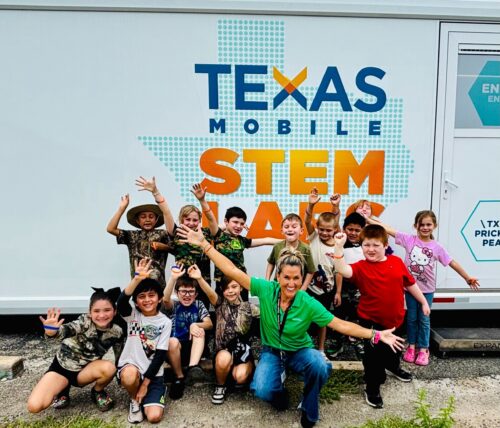
The ability to adapt is what makes Learning Undefeated stand out. In my role, we are able to travel around the country, visiting urban and rural communities to search for instructors who are able to develop relationships with students based on their needs. In a previous visit to Houston, my team and I were at an urban school and decided to make our way to another school in a rural community about two hours away. We were able to adapt in addressing the needs of both differing communities. By listening and keeping an open mind, we are able to foster an environment that is open to everyone.
Adaptability to different students, teachers, and working styles is what makes Learning Undefeated different from the rest. There is no single way to do things, and Learning Undefeated is equipped to adapt to the individual needs of each community we serve.
Are you working on any exciting new projects now? How do you think that will help people?
We’re working on expanding our Emerging Leaders in Biotech program, a peer mentor program where high school and college students work together to build career and laboratory skills. Through this program, students will be able to learn career readiness skills along with STEM components. We’re expanding by extending the program year-round and partnering with different colleges in more states. Our hope is to transform Learning Undefeated from a local program to a national program.
Ok super. Thank you for all that. Let’s now shift to the main focus of our interview. Are you currently satisfied with the status quo regarding women in STEM? What specific changes do you think are needed to change the status quo?
Nowadays, a lot of women are going into STEM, and we need changes in the infrastructure at the higher levels so that they can feel supported throughout their careers, including if they desire to start a family. As more women enter the field, it’s clear that there are still some outdated workplace ideas around gender and insufficient effort to truly make a more inclusive environment for women.
In your opinion, what are the biggest challenges faced by women in STEM or Tech that aren’t typically faced by their male counterparts? What would you suggest to address this?
The most significant challenge women in STEM face is that they are held to higher standards than their male counterparts. For many women in STEM, reaching the top can feel like an uphill battle — as though they must constantly prove their worth, while their male coworkers are more readily granted respect. I strongly believe we need to concentrate on reshaping the way we think about others and eliminating our outdated biases and stereotypes.
What are the “myths” that you would like to dispel about being a woman in STEM or Tech. Can you explain what you mean?
One myth that needs to be dispelled is that women in STEM can’t embrace their femininity. There is no reason why a woman should have to hide her femininity when working in STEM. We often create dichotomies that women can’t have a family or be feminine to be successful in STEM, but it is simply not true.
What are your “5 Leadership Lessons I Learned From My Experience as a Woman in STEM or Tech” and why. (Please share a story or example for each.)
1 . Don’t be afraid to speak up.
No one will stand up for you if you don’t do it yourself.
2 . It’s okay to be you!
You don’t have to act in a certain way to impress people. They will eventually come around.
3 . Stick together.
There will be times when you see someone who does not stand up for themselves. We must stick up for one another and stand together.
4 . It’s okay to be short!
I know it may be odd, but for me, as a shorter person, I have learned that people listen to other people who are taller. Women tend to be shorter than men, so find ways to be heard. Don’t let yourself be small.
5 . People are rooting for you!
Don’t listen to the noise, people always have your back.
None of us are able to achieve success without some help along the way. Is there a particular person who you are grateful towards who helped get you to where you are? Can you share a story about that?
I will always be grateful for my older sister, Rosalie. She has always been my source of support. Rosalie always knew that she wanted to be a doctor, and as a fellow woman in STEM, she was consistently there to give guidance and be a role model to me. Having her in my corner was a huge help as I navigated my career. I have looked up to her since I was a young child — she had to break the ground to show me the way.
How have you used your success to bring goodness to the world?
For me, it’s paramount to teach children that it’s okay to fail and to have fun! I always remind students that it’s okay not to be perfect at all times. I want my students to remember that learning should be fun, and mistakes are normal. Overall, I would say that giving children confidence and teaching perseverance goes a long way. I strive to ensure that every student knows that they are brilliant, regardless of their circumstances.
You are a person of enormous influence. If you could inspire a movement that would bring the most amount of good to the most amount of people, what would that be? You never know what your idea can trigger. 🙂
I would inspire all readers to embrace learning something new! When we open ourselves up to exciting knowledge, experiences, and ideas, we grow not only in what we know, but in who we truly are as a human being.
Can you please give us your favorite “Life Lesson Quote”? Can you share how that was relevant to you in your life?
“There is a huge amount of freedom that comes to you when you take nothing personally.” — Don Miguel Ruiz
I always encourage my students to not take things so personally. Challenges will happen in life, but you will eventually move past it. We all get nervous; but if we realize that this is just a moment, we can take comfort in knowing we will rise above it. Don’t let your mind be overtaken by outside noise. Your mind is the most valuable gift you own — keep it clear and guide it toward what truly matters.
We are very blessed that very prominent leaders read this column. Is there a person in the world, or in the US with whom you would love to have a private breakfast or lunch with, and why? He or she might just see this if we tag them 🙂
I am incredibly inspired by the story of Marie Curie as it relates to women in STEM. At a time where women were widely excluded from STEM related careers and fields, Curie broke barriers. Having one two Nobel Peace Prizes in science, I am inspired by her curiosity and commitment as a female STEM trailblazer. I would love to sit down with her to learn more about her story — she paved the way for women like me to be taken seriously in STEM fields.
Thank you for these fantastic insights. We greatly appreciate the time you spent on this.
A Record-Breaking Year: Highlights from Our 2025-2026 Impact Report
Sep 29, 2026
Annual Report, Mobile Labs, News
This school year was a big one for Learning Undefeated: new immersive STEM labs hit the road, programs exploded into new communities and career fields, and more students than ever (400K!) had the chance to learn, explore, and see what’s possible for their future. Check out our 2025-2026 Impact Report, Learning Built for What’s Next for the stories, milestones, and moments that made this year one to remember.
AI in Practice: Using Artificial Intelligence to Shape How We Inspire Future Health Tech Innovators
Jul 28, 2026
Careers, Game-based learning, Mobile Labs
When people think about AI in education, they often imagine tools students use directly. But in a new Learning Undefeated collaboration, AI first plays a quieter—and arguably more powerful—role behind the scenes.…
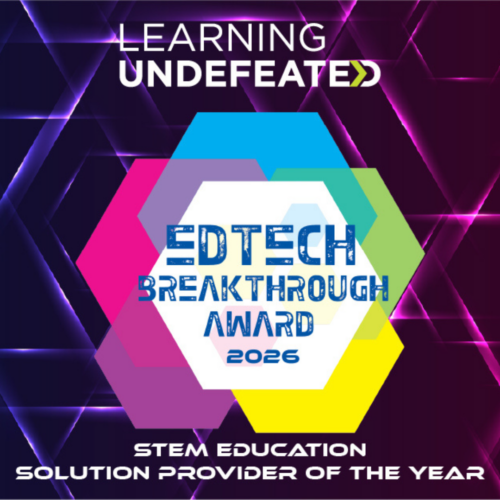
Learning Undefeated Named “Overall STEM Education Solution Provider of the Year” by EdTech Breakthrough Awards
Jun 10, 2026
Awards, News
Prestigious International Awards Program Recognizes Standout Educational Technology Companies and Visionaries Shaping the Future of Learning Learning Undefeated has been selected as “Overall STEM Education Solution Provider of the Year” in…