In education, students might not remember every detail of what they learned, but they will remember if they felt capable, included, or inspired.
In recent years, Big Tech has gotten a bad rep. But of course, many tech companies are doing important work making monumental positive changes to society, health, and the environment. To highlight these, we started a new interview series about “Technology Making an Important Positive Social Impact.” We are interviewing leaders of tech companies who are creating or have created a tech product that is helping to make a positive change in people’s lives or the environment. In this particular installment, we are talking to leaders of Education Technology companies, who share how their tech is helping to improve our educational system.
As a part of this series, we had the pleasure of interviewing Kristin Farfan.
Kristin Farfan is an educator and curriculum designer dedicated to creating hands-on and immersive STEM learning experiences that bring complex concepts to life. She began her journey with nonprofit Learning Undefeated as an educator on the organization’s mobile labs, where she spent five years inspiring students through experiential learning. Her time in the classroom sparked a passion for designing engaging programs that help students connect what they’re learning to real-world applications and the skills needed in future STEM careers.
Thank you so much for joining us in this interview series. Before we dive in, our readers would love to learn a bit more about you. Can you tell us a bit about your childhood backstory and how you grew up?
I grew up in the suburbs of Boston, Massachusetts, and spent lots of time playing outside and using my imagination! I’ve always had a knack for creating and imagining scenarios as a kid. In school, I loved figuring out how things worked, so naturally, I was really drawn to math and science. The mix of creativity and problem-solving definitely shaped me into the person I am today and the work I do at Learning Undefeated.
Can you share the most interesting story that happened to you since you began your career?
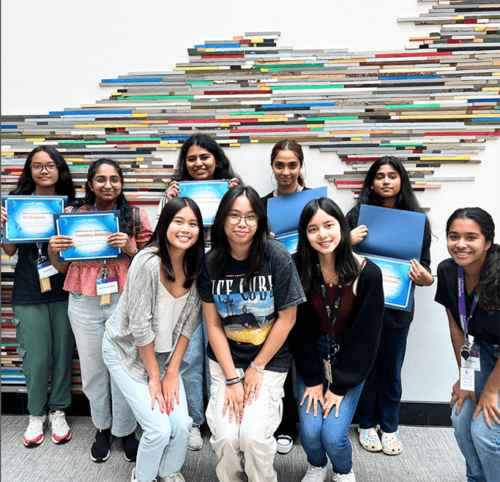
In the summer of 2022, I worked with a high school student in our Emerging Leaders Biotech program, a fast-paced hands-on accelerated biotechnology course that introduces high school and college students to high-demand STEM careers.
This student came in as an interested rising high school sophomore but was unsure what career path she wanted to go into. Through the experience, she decided that she wanted to pursue biology as a career. The coolest part — she came back to Learning Undefeated to volunteer and help us design new experiences just like the one that inspired her career journey. Seeing that full-circle moment was really powerful.
None of us are able to achieve success without some help along the way. Is there a particular person who you are grateful towards who helped get you to where you are? Can you share a story about that?
I am grateful for our wonderful Chief Innovation Officer, Jen Colvin, who has helped me along the way. Jen is the kind of person who will always encourage you to think bigger and not settle for “good enough.” Not only does she challenge our ideas, but she also makes them stronger, encouraging creative, out-the-box thinking.
Jen helped shape how I think about designing meaningful experiences for every student who enters our labs. From what started out as short, small escape room games have now grown into complex and innovative programming Mobile STEM Labs.
Can you please give us your favorite “Life Lesson Quote”? Can you share how that was relevant to you in your life?
One quote that has stayed with me is, “People will forget what you said, people will forget what you did, but people will never forget how you make them feel.”
I try to be really intentional about how I show up for people. I find that it’s less about being “right” or having the perfect answer, but more about being supportive and present. The way you make people feel in everyday interactions is what they carry with them.
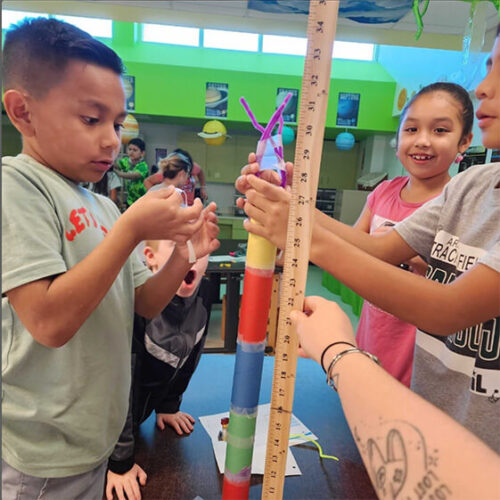
In education, students might not remember every detail of what they learned, but they will remember if they felt capable, included, or inspired. My job is to create moments that spark that memory and feeling of “I can do this.” The feeling of confidence and ownership is what we want students to walk away with, not just completing the activity.
You are a successful business leader. Which three character traits do you think were most instrumental to your success? Can you please share a story or example for each?
The first would be thoughtfulness. I tend to step back and think through the whole system before jumping to a solution. I’m always considering how different pieces connect and impact each other, especially in our game designs. This helps us design experiences that feel cohesive and not pieced together.
The second character trait would be empathy. I care a lot about how someone is experiencing what I’ve designed. If something is confusing or frustrating, I want to understand why and fix it in the best way possible. Most of my decisions come down to making sure participants feel capable and engaged. Having empathy helps me put myself in their shoes.
Being practical is another character trait that is instrumental to me. I focus on making things work in the real world, not just as an idea or theory. I often think about logistics, constraints, and usability.
Ok super. Let’s now shift to the main part of our discussion about the tech tools that you are helping to create that can make a positive social impact on our educational systems. To begin, what problems are you aiming to solve?
I find great joy in working with students to bring innovative, tech-powered experiences to life through education!
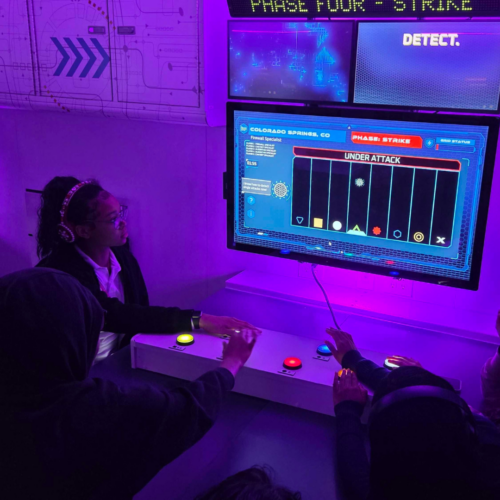
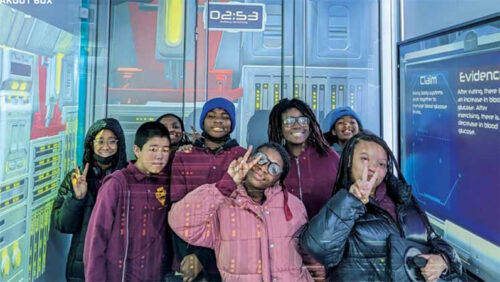
Learning Undefeated’s Breakout Box: Manufacturing Challenge is an outstanding example of tech that’s helping to bring the real-world industry to students. A major issue in today’s education system is that many students are expected to make decisions about their future careers before they’ve had the opportunity to fully explore their interests and options. Our tech-powered Breakout Box aims to solve this issue. We’ve built several different Breakout Box games — on topics including AI, cybersecurity, and biomanufacturing — to let students engage with careers that are really difficult to experience in the classroom.
This traveling learning challenge lets students nationwide explore the world of high-paying and high-demand manufacturing careers. Inside this immersive experience, students explore skills and competencies needed to be successful in the manufacturing jobs of tomorrow. This deep impact learning program offers students an engaging, immersive storyline that equips them with knowledge and resources about high-demand careers and learn-and-earn opportunities in their community.
This educational experience assists students in discovering their interests in their future careers at a young age. Our Breakout Box creates a world or room that’s unlike anything they’ve seen in the classroom by putting students in a position as real scientists and engineers.
How do you think your technology can address this?
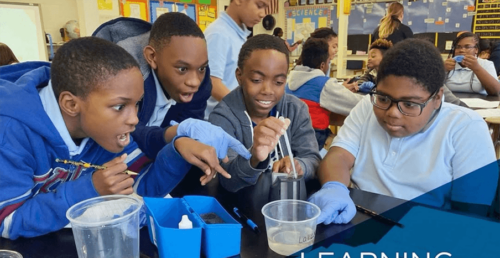
Learning Undefeated intentionally designs highly interactive experiences to keep students excited to learn.
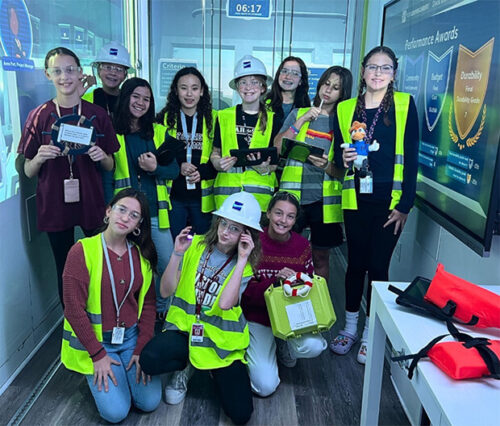
For example, on board our Breakout Box: Manufacturing Challenge, students are captivated by a mission where, in a futuristic scenario where the sun’s rays are ultra strong, they must infiltrate a manufacturing facility to manufacture affordable and sustainable sunglasses for everyone!
As students engage in the storyline, they are often having so much fun that they forget they’re at school. Computer screens and tablets are great for the classroom, but larger scale, hands-on tech experiences like our Breakout Box create a far more meaningful and memorable learning environment.
Can you tell us the backstory about what inspired you to originally feel passionate about education?
I consider myself a lifelong learner with a passion for education. I’m delighted to serve students in a position where I continue to learn something new as I teach them each day.
A motto I have kept throughout life is that the best way to learn something is to teach it to others. I truly enjoy learning topics in great depth and sharing my knowledge with students, helping to invigorate their interests in learning at a young age.
How do you think your technology might change the world?
Each time our mobile STEM lab rolls out of the school parking lot, I know there are students who have been transformed by this experience. This sense of “oh, I could do this” is where any of us feels like we, too, have the power to change the world. Again and again, we hear that students report feeling called to the manufacturing field after engaging with our Breakout Box. Not every student is going to walk away thinking they want to partake in this career — even so, our team agrees that it is best to make this discovery early on in life to allow students time to continue to seek a career they find joy in and are passionate about.
Keeping the “Law of Unintended Consequences” in mind, can you see any potential drawbacks about this technology that people should think more deeply about?
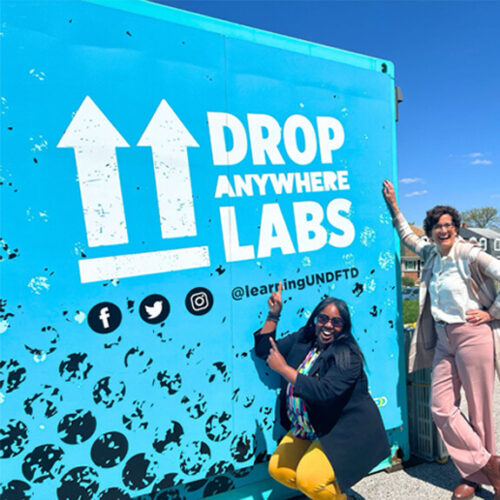
The drawback to our Breakout Box experiences is that we are limited by physical space and time — we can’t be in all places, all at once. We cover the miles every year with 16 traveling mobile STEM labs that allow students across the country to explore careers in biology, chemistry, technology, and more! Our high-tech mobile laboratories visit schools nationwide to deliver flexible, immersive learning environments and STEM experiences to students in under-resourced, disaster-impacted, or hard-to-reach communities.
How do you envision the landscape of education evolving over the next decade, and how does your technology fit into that future?
Game‑based learning is constantly evolving as it creates high engagement through active problem‑solving, collaboration, and low‑risk experimentation.
These experiences align with science and engineering practices while building durable skills like critical thinking, communication, and adaptability.
Our student surveys demonstrate the impact of game-based learning: 84% of students said the Breakout Box made manufacturing fun, 63% became more interested in exploring manufacturing outside school, and 60% reported learning skills applicable to manufacturing careers.
Based on your experience and success, can you please share “Five things you need to know to successfully create technology that can make a positive social impact”?
1. Design for how people behave, not how you expect them to
Observing real users will quickly challenge your assumptions. We often wish students could focus more or read instructions, but that’s often not the behavior we see, so we need to design to engage them in ways that encourage the behaviors we want.
2. Embrace constraints
Some of the best ideas come from working within limitations like time, tools, or physical space. As much as we wish we could create theme park level experiences, they wouldn’t hit the same outcomes and the product created to a specific set of criteria ends up being a much more unique experience unlike anything they’ve ever seen.
3. Design for accessibility and inclusion
If your solution only works for some people, it’s not truly impactful. This can account for visibility and mobility differences but also accessibility in terms of age and prior knowledge.
4. Test early and often
Real feedback from users will always be more valuable than assumptions. Seeing how users interact with the space and getting their thoughts on what was difficult or fun will only help to build a more impactful program.
5. Measure impact, not just output
Success isn’t what you built — it’s how it improved someone’s experience or outcome. Asking participants how they felt after their experience and then tweaking the experience to improve will help to make something that is truly impactful and something students remember for years later.
In the world of EdTech, there’s often data collection involved. How do you ensure the ethical handling of user data, especially when it concerns students?
The safety of our Learning Undefeated students is paramount. We care about that a lot. We survey students after the experience to get their thoughts and allow them to reflect on their time with us. These surveys are fully anonymous, optional, and results are securely stored. These surveys allow us to continuously improve our experiences, delivering the best quality education to our students.
Our team always has the safety of our students in mind. All activities require a signed waiver, so students and parents are aware that some experiences have flashing lights, sounds, and special effects — and we also can offer a low sensory mode or adapt activities for classes upon request.
If you could tell other young people one thing about why they should consider making a positive impact on our environment or society, like you, what would you tell them?
The only way we’ll see positive change in our society is if we take action ourselves. It’s simple for the world to feel overwhelming, but impact begins with real, actionable steps — and these efforts often lead to meaningful change.
Is there a person in the world, or in the US with whom you would like to have a private breakfast or lunch, and why? He or she might just see this, especially if we tag them. 😊
While this is not a singular, specific person, I would love to sit and chat with a Disney Imagineer or a Universal Creative team member. I grew up loving Disney and Universal theme parks, and I would love to understand more about the constraints they deal with and how they bring their stories to life.
How can our readers further follow your work online?
AI in Practice: Using Artificial Intelligence to Shape How We Inspire Future Health Tech Innovators
Jul 28, 2026
Careers, Game-based learning, Mobile Labs
When people think about AI in education, they often imagine tools students use directly. But in a new Learning Undefeated collaboration, AI first plays a quieter—and arguably more powerful—role behind the scenes.…
Learning Undefeated Named “Overall STEM Education Solution Provider of the Year” by EdTech Breakthrough Awards
Jun 10, 2026
Awards, News
Prestigious International Awards Program Recognizes Standout Educational Technology Companies and Visionaries Shaping the Future of Learning Learning Undefeated has been selected as “Overall STEM Education Solution Provider of the Year” in…
Learning Undefeated Named a 2026 Community Impact Award Winner by Culture of Good, Inc.
May 27, 2026
Awards, News
Learning Undefeated has been named a 2026 Community Impact Award Winner by Culture of Good in recognition of its meaningful commitment to serving others, strengthening communities, and using business as…