Micropipette Challenge is an activity developed to introduce students to micropipettes, a commonly-used laboratory tool.
A micropipette is a very fine pipette tool for measuring, transferring, or injecting very small quantities of liquid. This tool has revolutionized the handling of small liquid volumes and is used across all fields of science, including, chemistry, biology, forensic science, pharmaceutics, etc. Micropipettes use a scale of measurement that is based on the metric system. The metric system is a system of measurement based on the powers of 10 and is also synonymous with the System of International Units, which is the most widely used system of measurement.
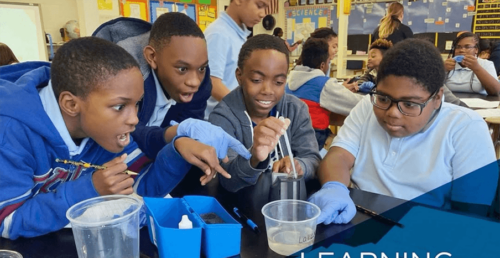
The Micropipette Challenge is a perfect introductory activity, allowing students to gain experience with the tools and techniques used in other Learning Undefeated labs. In this lab, students work with small amounts of liquid to create a visible spectrum. Students will also learn how to carefully read and follow a scientific protocol, as well as gain experience working with units in the metric system.
Students will perform protein purification using column chromatography to gain a greater understanding of the biomanufacturing process of going from a cell to a protein to a product.
In this design challenge, students will work together to design a tool or process that successfully removes an invasive species from an ecosystem while minimizing harm to the native species and environment.