Engineering Prosthetics to Help Injured Animals Thrive
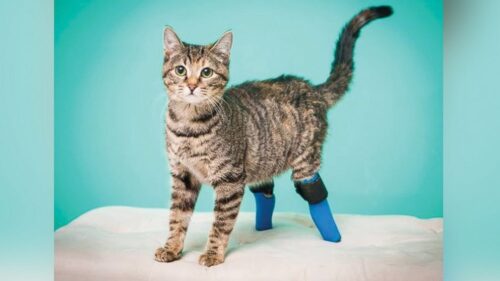
Rescue and Design is a wildlife engineering challenge where students investigate how injuries affect an animal’s ability to move, then design a prosthetic solution to restore mobility. Using diagnostic charts and X-rays, students explore the relationship between structure and function in marine animals, such as how fins and flippers support steering, balance, and forward motion. This scientific foundation helps students understand why an injured animal may swim in circles or struggle to propel itself.
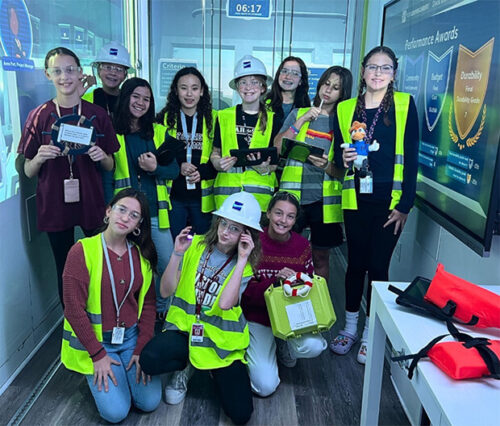
Students then act as biomedical engineers tasked with creating a prosthetic for an injured animal in a rescue center. Working within time, budget, and material constraints, teams brainstorm, sketch, build, and test prototypes on a model animal. Their goal is to design a durable prosthetic that allows the animal to swim in a straight line while minimizing additional harm. Students iterate on their designs based on performance and conclude by reflecting on what worked, what didn’t, and how engineering can support wildlife rehabilitation.
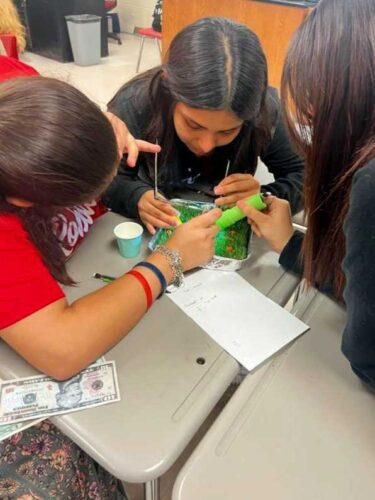
In this design challenge, students will work together to design a tool or process that successfully removes an invasive species from an ecosystem while minimizing harm to the native species and environment.
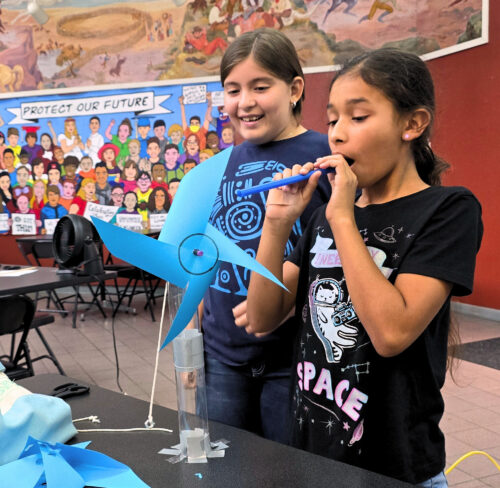
In this challenge, students will practice problem-solving and collaboration skills as they design, build, and test their wind turbine
prototypes. Students will explore the role of renewable energy in powering communities, learn about energy transfer and mechanical systems, and gain insight into the importance of sustainable energy solutions.
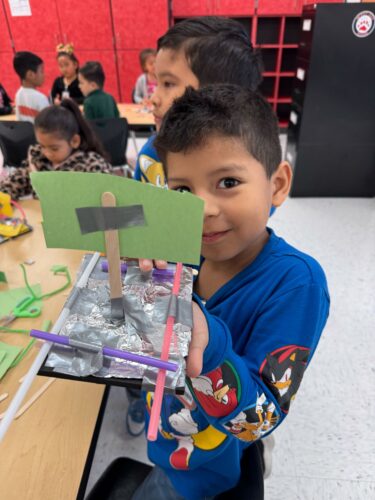
In this design challenge, students will receive a problem from the story Who Sank the Boat? by Pamela Allen. Students will engage in a STEM challenge to build a boat in 25 minutes that can float while holding the animal figures for a set amount of time without sinking.