Engineering a Solution to Underwater Noise Pollution
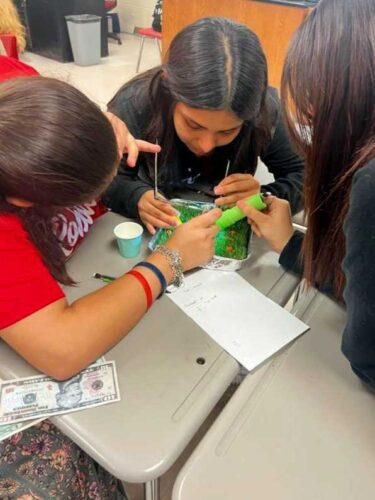
In this design challenge, students will take on the role of environmental engineers to design an innovative bubble curtain system that reduces underwater construction noise at the Port of LU. Students will learn how sound travels through air and water, explore Avogadro’s, Boyle’s, and Charles’s gas laws, and apply these principles to develop a working model that protects marine life from harmful noise pollution.
Presented with the problem – “The Port of LU wants to invest in a bubble curtain to help reduce underwater noise while constructing a new dock. They need an engineering team that can design one quickly and cost-effectively”. Students will prototype, test, and pitch their final bubble-curtain designs to a panel. Through this challenge, they will apply chemistry and physics concepts in a real world context while demonstrating creativity, collaboration, and problem solving.
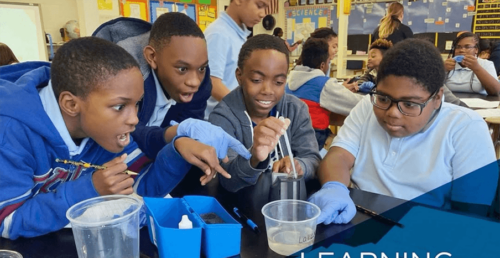
In this design challenge, students will work together to design a tool or process that successfully removes an invasive species from an ecosystem while minimizing harm to the native species and environment.
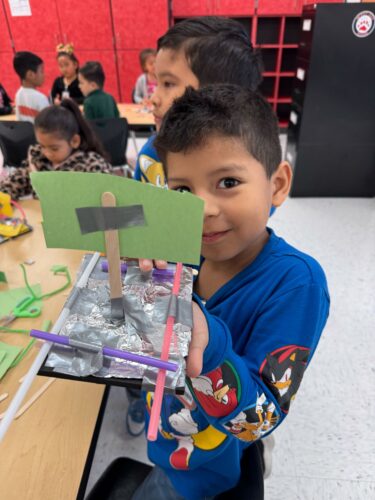
In this challenge, students will practice problem-solving and collaboration skills as they design, build, and test their wind turbine
prototypes. Students will explore the role of renewable energy in powering communities, learn about energy transfer and mechanical systems, and gain insight into the importance of sustainable energy solutions.
In this design challenge, students will receive a problem from the story Who Sank the Boat? by Pamela Allen. Students will engage in a STEM challenge to build a boat in 25 minutes that can float while holding the animal figures for a set amount of time without sinking.