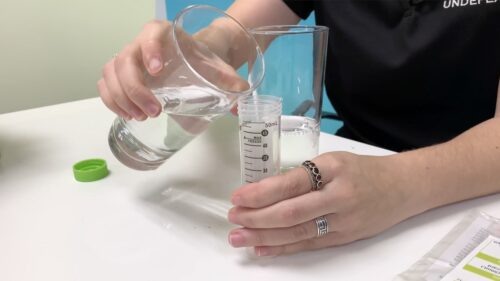
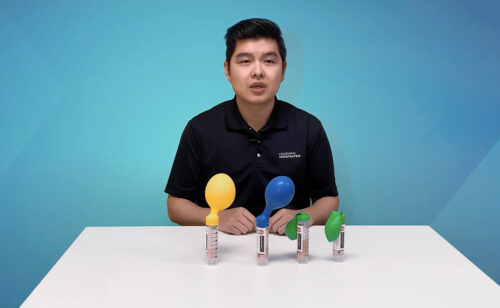
Cellular respiration is a chemical reaction that occurs in your cells to create energy in the form of adenosine triphosphate (ATP). This ATP can be used to power proteins in your cells and can even be used to power the proteins that help you move. This activity will address how exercise affects the rate of cellular respiration using three different indicators: breathing rate, heart rate, and carbon dioxide production.
Learning Objectives
How to Run the Experiment
Safety Information
Learning Undefeated is dedicated to bringing authentic laboratory science experiences to students, even while they’re learning at home. To maintain regular laboratory protocol, you will find all materials are labeled with a National Fire Protection Association (NFPA) Safety Diamond. This is used to quickly tell users about the hazards that a material possesses including health, flammability, and instability hazards. Though all of the materials contained in the kit are deemed very safe (a 0 or 1 on each category), we thought providing this information was important for students to see and begin learning about.
The Occupational Safety and Health Administration (OSHA) requires that Materials Safety Data Sheets (MSDS) are provided as well. Below you will find the MSDS for the reagents supplied in our Exercise Lab kit.
Welcome to the Emerging Leaders in STEM resource center! This is where you’ll find everything you need for this year’s Emerging Leaders in Biotechnology program. Whether you’re preparing for your next session or reviewing what you’ve learned, this page is for you.