Skip to Content

Anaerobic Respiration Lab

Play Video
anaerobic aspiration experiment
triangles

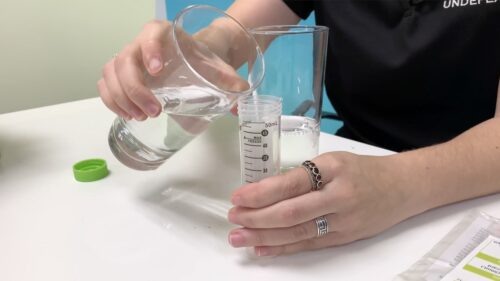
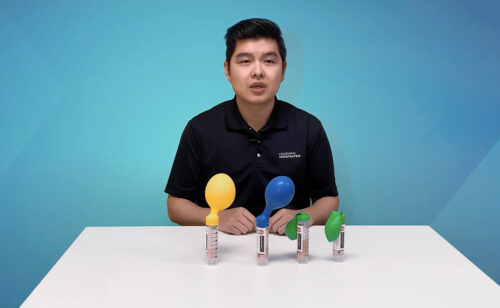
Fermentation is a process that converts sugar into carbon dioxide and alcohol. This process happens in the absence of oxygen, making it an anaerobic process. In this experiment, students investigate the effect of sugar concentration on yeast’s anaerobic respiration rate.

Learning Objectives

  • How to Run the Experiment

  • Safety Information

    Learning Undefeated is dedicated to bringing authentic laboratory science experiences to students, even while they’re learning at home. To maintain regular laboratory protocol, you will find all materials are labeled with a National Fire Protection Association (NFPA) Safety Diamond. This is used to quickly tell users about the hazards that a material possesses including health, flammability, and instability hazards. Though all of the materials contained in the kit are deemed very safe (a 0 or 1 on each category), we thought providing this information was important for students to see and begin learning about.

    The Occupational Safety and Health Administration (OSHA) requires that Materials Safety Data Sheets (MSDS) are provided as well.  Above you will find the MSDS for the reagents supplied in our Anaerobic Respiration Lab kit.


    Keep Going! Your Students May Also Enjoy...

    Exercise Lab
    exercise lab in progress

    Exercise Lab

    This activity will address how exercise affects the rate of cellular respiration using three different indicators: breathing rate, heart rate, and carbon dioxide production.

    Grade Level: High School (9 - 12)

    Subject: Biology and Life Sciences

    Curriculum Unit: From Molecules to Organisms

    Coast to Coast: Maintaining Healthy Habitats

    Coast to Coast: Maintaining Healthy Habitats

    In this design challenge, students will work together to design a tool or process that successfully removes an invasive species from an ecosystem while minimizing harm to the native species and environment.

    Grade Level: 3-5

    Subject: Biology and Life Sciences , Engineering , Environmental Science

    Curriculum Unit: Engineering Design

    Renewable Innovators

    Renewable Innovators

    In this challenge, students will practice problem-solving and collaboration skills as they design, build, and test their wind turbine prototypes. Students will explore the role of renewable energy in powering communities, learn about energy transfer and mechanical systems, and gain insight into the importance of sustainable energy solutions.

    Grade Level: 3-5

    Subject: Engineering , Physics

    Curriculum Unit: Energy , Engineering Design

    How Did It Go? Send Us Feedback (or Pics)!

    Join the Mission