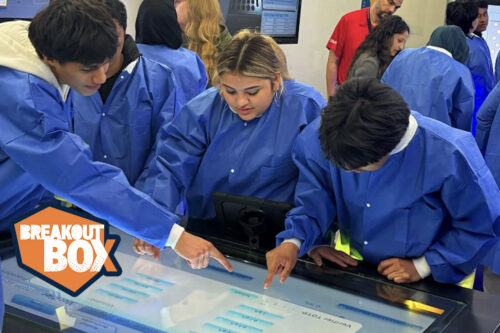
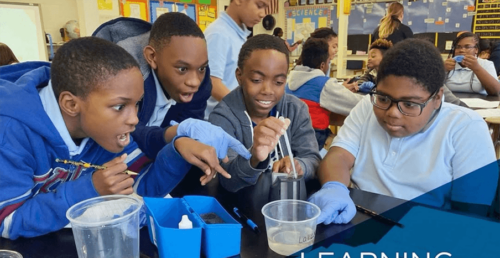
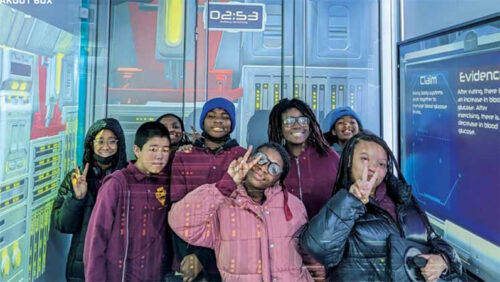
Welcome to the front lines of biotechnology. In this 40-minute experience, students will step into the role of a new technician at a state-of-the-art biomanufacturing facility. They will be trained on how cells are grown to produce therapeutics and learn how they are purified in a safe and sterile manner using aseptic technique. Students will learn the rules, standards, and Current Good Manufacturing Practices (CGMP) that technicians must follow to get a treatment from the laboratory to patients.
Learning Objectives
Practice and understand the roles of upstream and downstream manufacturing processes in making a biologic
Practice current Good Manufacturing Practices such as aseptic technique, documentation and verifications
Standards Alignments + Connections
Texas Essential Knowledge and Skills
Biology 4.C: research and explore resources such as museums, libraries, professional organizations, private companies, online platforms, and mentors employed in a science, technology, engineering, and mathematics (STEM) field in order to investigate STEM careers. 7.D: discuss the importance of molecular technologies such as polymerase chain reaction (PCR), gel electrophoresis, and genetic engineering that are applicable in current research and engineering practices.
Chemistry 4.C: research and explore resources such as museums, libraries, professional organizations, private companies, online platforms, and mentors employed in a science, technology, engineering, and mathematics (STEM) field in order to investigate STEM careers. 11.F: calculate the dilutions of solutions using molarity
Principles of Bioscience 3.C: identify and define terms related to biotechnology regulations such as Good Laboratory Practices (GLP), Good Manufacturing Practices (GMP), and Globally Harmonized System (GHS); 6.A: identify biotechnology manufacturing processes and their end products, including waste and marketable products; 7.C: identify applications of medical and pharmaceutical biotechnology such as genetically modified cells, antibodies, vaccine and gene therapy, genetic testing for human disease/disorders, three-dimensional bio-printing, and medicines from plants, animals, fungi, and bacteria
Biotechnology I 5.H: identify applications in medical biotechnology such as vaccines production, stem cells therapy, gene therapy, pharmaceutical production, pharmacogenetics, genomics, synthetic biology, and personalized medicine 8.C: explain the role of tissue cultures in genetic modification procedures 9.B: analyze policies and procedures used in the biotechnology industry such as quality assurance, standard operating procedures (SOPs), Good Manufacturing Practices (GMPs), and International Organization for Standardization (ISO) quality systems. 10.A: measure volumes and weights to industry standards with accuracy and precision 11.A: demonstrate aseptic techniques for establishing and maintaining a sterile work area; 11.B: prepare, dispense, and monitor physical properties of stock reagents, buffers, media, and solutions 11.C: calculate and prepare a dilution series
Biotechnology II 8.D: isolate a specific protein from a biological sample using techniques such as chromatography and Western blot analysis 9.A: prepare and maintain tissue cultures commonly used in genetic modification procedures 10.A: demonstrate aseptic techniques for establishing and maintaining a sterile work area; 10.B: prepare, dispense, and monitor physical properties of stock reagents, buffers, media, and solutions 10.C: calculate and prepare a dilution series 10.E: prepare multi-component solutions of given molarity or concentration and volume 11.F: describe Good Manufacturing Practices (GMP), Good Clinical Practices (GCP), Good Documentation Practices (GDP), Good Lab Practices (GLP), and International Organization for Standardization (ISO) 11.I: apply and create industry protocols such as laboratory method protocols, standard operating procedures (SOPs), and validation forms
Activity Components
Participants will control and manipulate different areas throughout the biomanufacturing process including media preparation, cell culture monitoring, harvesting cells, product purification, and dilutions and dosing. While learning about these areas, students will need to meet three goals:
Yield: Did you produce enough of the antibody?
Purity: Is the product clean and safe?
Compliance: Did you follow all procedures correctly?
Students will collaborate to meet their goals. By the end of the experience, students will be able to understand the roles of upstream and downstream manufacturing processes in making a biologic. In addition, will understand current Good Manufacturing Practices such as aseptic technique, documentation, and verification.
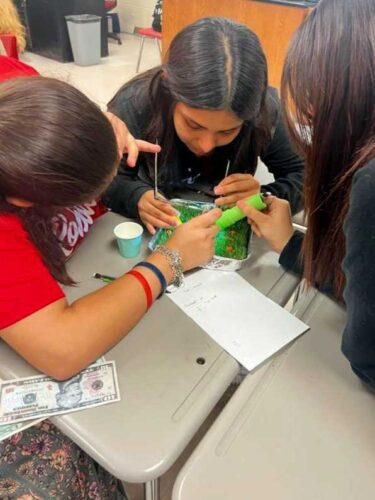
In this design challenge, students will work together to design a tool or process that successfully removes an invasive species from an ecosystem while minimizing harm to the native species and environment.
In this challenge, students will practice problem-solving and collaboration skills as they design, build, and test their wind turbine
prototypes. Students will explore the role of renewable energy in powering communities, learn about energy transfer and mechanical systems, and gain insight into the importance of sustainable energy solutions.
In this activity, students will read the story "In a Garden" by Tim McCanna. They will learn about the life cycle of a plant, what seeds need to grow, and what keeps seeds from growing. They will then create their own seed house and watch their seeds sprout!