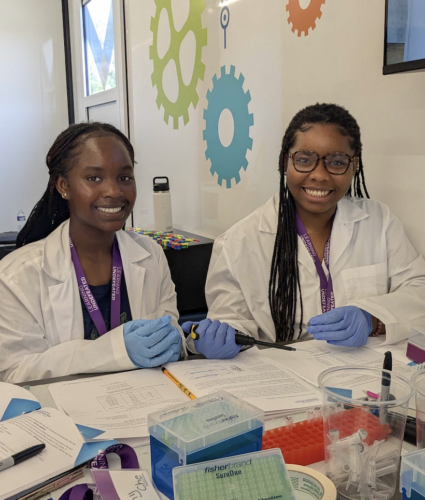
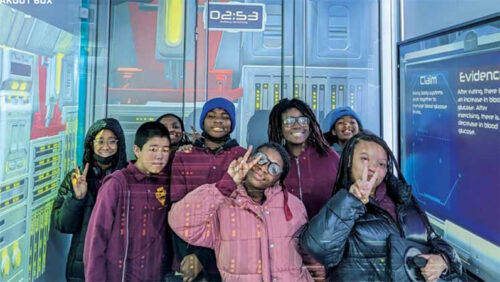
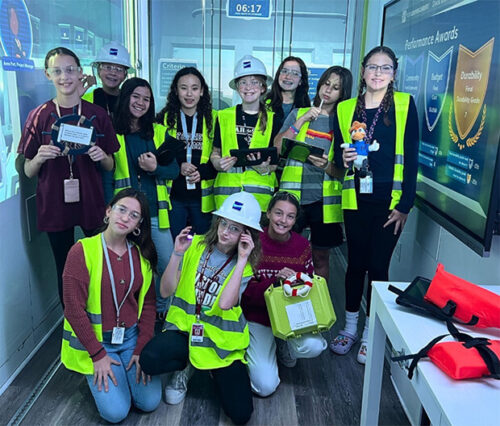
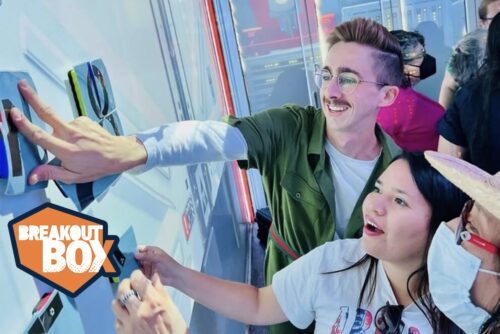
Students enter a mysteriously abandoned and shut down remote Drop Anywhere Lab and they will need to work together to solve puzzles using diabetes research left behind to finish the project before time runs out and the alarm sounds.
The Body Systems Mission takes middle school students on an immersive adventure using computational thinking and the practices of science and engineering to crack a series of puzzles to restore lost data in the abandoned Drop Anywhere Lab. From the moment they step inside this custom-built 22-foot shipping container, students experiment with augmented reality, game-based learning, and touchscreen walls, building their critical thinking, collaboration, and problem-solving skills.
Learning Objectives
Analyze and interpret data
Use basic math operations to solve a puzzle
Solve puzzles using computational thinking
Manipulate a model and/or simulation
Make a conclusion and form an argument supported by evidence
Standards Alignments + Connections
MS-LS1-3: Use argument supported by evidence for how the body is a system of interacting subsystems composed of groups of cells.
7.13.A: Identify and model the main functions of the systems of the human organism, including the circulatory, respiratory, skeletal, muscular, digestive, urinary, reproductive, integumentary, nervous, immune, and endocrine systems
LS.3.A: Patterns of cellular organization support life processes
3.1.6-8.C: use arguments supported by evidence for how the body is a system of interacting subsystems composed of groups of cells.
This will introduce students to the body systems that regulate glucose and how they are affected when a person has diabetes.
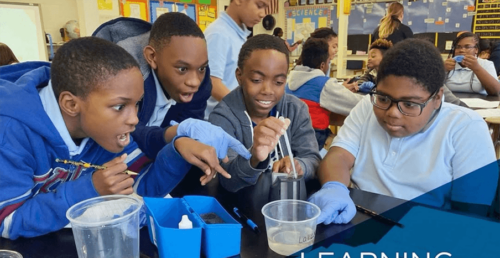
Through progressive gameplay, students work as a team to analyze and interpret data while learning about interacting body systems through the lens of diabetes. Students will work together to solve problems that help them understand how different body systems change blood glucose including, taking away glucose to make energy or adding glucose that was recently digested. Puzzles include a cardiovascular simulation, selecting food, exercise, and insulin options to manipulate blood glucose concentration in diabetic and non-diabetic patients over time. Students also analyze and interpret data as they learn about concentration using plasma vials, interpreting graphs, and supporting a claim with reasoning and evidence.
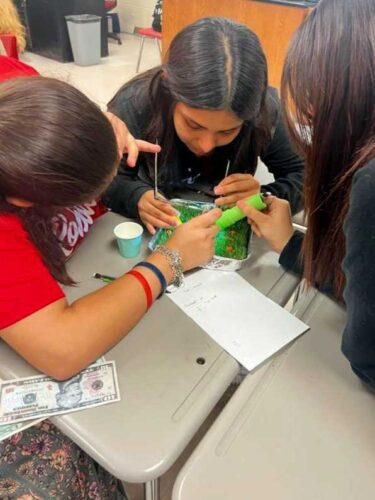
In this design challenge, students will work together to design a tool or process that successfully removes an invasive species from an ecosystem while minimizing harm to the native species and environment.
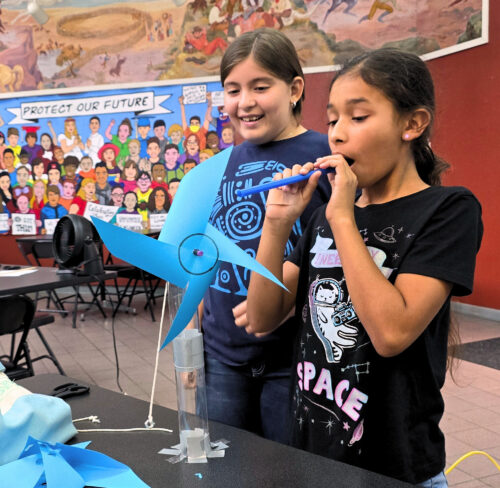
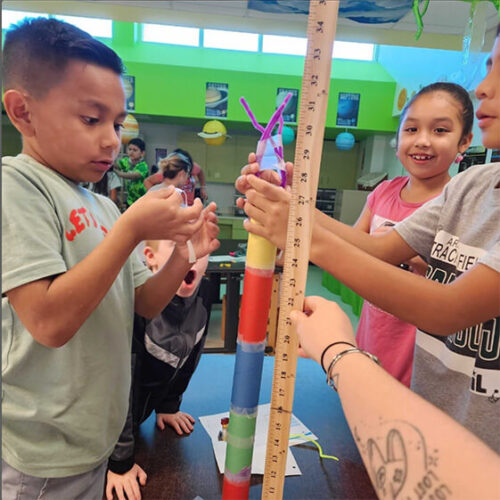
In this challenge, students will practice problem-solving and collaboration skills as they design, build, and test their wind turbine
prototypes. Students will explore the role of renewable energy in powering communities, learn about energy transfer and mechanical systems, and gain insight into the importance of sustainable energy solutions.
In this activity, students will read the story "In a Garden" by Tim McCanna. They will learn about the life cycle of a plant, what seeds need to grow, and what keeps seeds from growing. They will then create their own seed house and watch their seeds sprout!