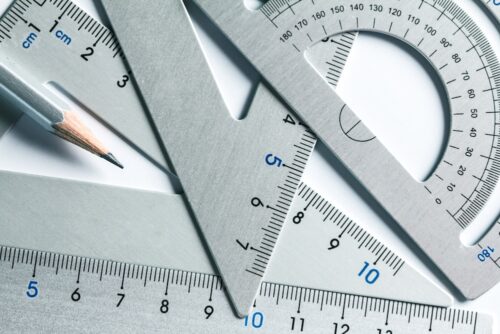
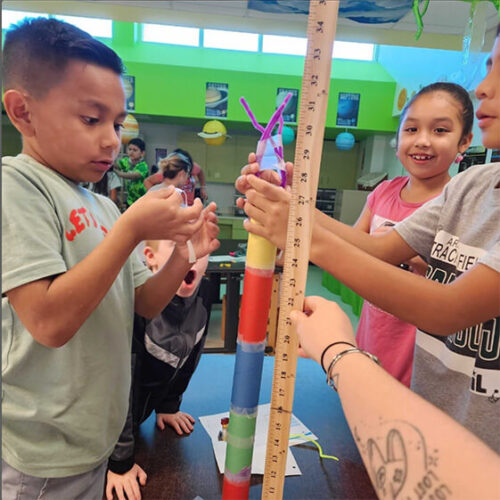
Metrology is an activity developed by Learning Undefeated to help students understand the difference between precision and accuracy and how both play an important role in the manufacturing industry.
In this activity, students will use tools like rulers and calipers to measure items and collect class data to calculate averages and standard deviations. Students will also be introduced to the idea of tolerance in a designed part. Students will see that different tolerances are required depending on the function of the part. Interference and clearance fits will be discussed as students try to determine the best hole tolerance for a metal pin.
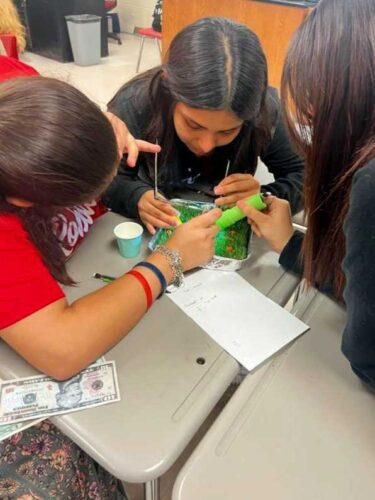
This lesson challenges students to think like those who design & manufacture surgical instruments and devices by illustrating the concept of measurement and precision.
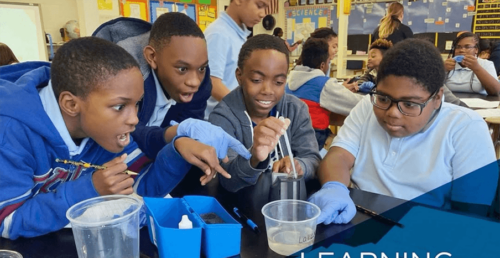
In this design challenge, students will work together to design a tool or process that successfully removes an invasive species from an ecosystem while minimizing harm to the native species and environment.
In this challenge, students will practice problem-solving and collaboration skills as they design, build, and test their wind turbine
prototypes. Students will explore the role of renewable energy in powering communities, learn about energy transfer and mechanical systems, and gain insight into the importance of sustainable energy solutions.
In this activity, students will read the story "In a Garden" by Tim McCanna. They will learn about the life cycle of a plant, what seeds need to grow, and what keeps seeds from growing. They will then create their own seed house and watch their seeds sprout!