
What If There Were No Bees? (Learning Undefeated)
Let's Make an Artificial Pollinator!
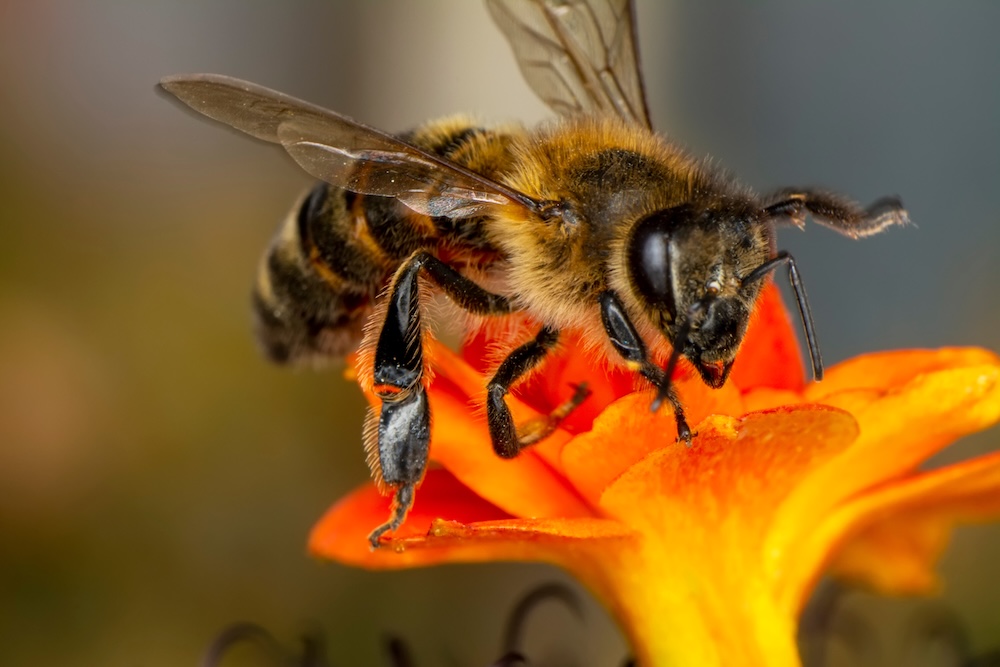
In this design challenge, students will receive a problem derived from the story What If There Were No Bees? by Suzanne Slade.
In the story, Suzanne talks about how bees help the ecosystem and the ramifications if bees were to disappear from the ecosystem.
The students will be presented with the following problem:
“The Lee, Martinez, and Smith families have noticed that there are fewer bees around their farm. They are worried that over time, there may be no bees left to pollinate their crops. What can they do to make sure their crops and surrounding lands get pollinated?
Students will engage in a STEM challenge to build an artificial pollinator in 25 minutes. Teams will receive bonus points if their pollinator can transfer enough pollen in different size flowers!
Learning Objectives
Students will be able to
- Compare the ways living organisms depend on each other and on their environments through food chains
- Solve a problem using the engineering design process
- Build a device by applying an understanding of the physical properties of objects, and smaller units can be combined to make new objects
- Classify building materials by their physical properties
- Count forward and backward to at least 20 with and without objects
Standards Alignment + Connections
Next Generation Science Standards
2-LS2-2- Develop a simple model that mimics the function of an animal in dispersing seeds or pollinating plants
3-LS4-4: Make a claim about the merit of a solution to a problem caused when the environment changes and the types of plants and animals that live there may change.
3-5-ETS1-1: Define a simple design problem reflecting a need or a want that includes specified criteria for success and constraints on materials, time, or cost.
3-5-ETS1-2: Generate and compare multiple possible solutions to a problem based on how well each is likely to meet the criteria and constraints of the problem
Maryland College and Career Ready Standards
Standards for Mathematics
2.OA.B: Add and subtract within 20
2.MD.C: Work with time and money
4.NF.C: Understand decimal notation for fractions, and compare decimal fractions.
Standards for Language Arts
RL.3.1: Ask and answer questions to demonstrate understanding of a text, referring explicitly to the text as the basis for the answers.
RL.3.2 Recount stories, including fables, folktales, and myths from diverse cultures; determine the central message, lesson, or moral and explain how it is conveyed through key details in the text.
Texas Essential Knowledge and Skills
2021 Science TEKS covered in this design challenge
Grade 2 TEKS: 2.1.B, 2.1.E, 2.1.G, 2.12.B, 2.12.C
Grade 3 TEKS: 3.1.B, 3.1.E, 3.1.G, 3.12.C
Math TEKS covered in this design challenge
Grade 2 TEKS: 2.2.B, 2.4.A
Grade 3 TEKS: 3.4.A, 3.4.C, 3.7.E
ELAR TEKS covered in this design challenge
Grade 2 TEKS: 2.1.D, 2.6.B, 2.8.C
Grade 3 TEKS: 3.1.A, 3.1.D, 3.6.B
Grade 4 TEKS: 4.1.A, 4.1.D, 4.6.B
2022 Technology Applications TEKS covered in this design challenge
Grade 2 TEKS: 2.3.A, 2.3.B
Grade 3 TEKS: 3.3.A, 3.3.B
Grade 4 TEKS: 4.3.A, 4.3.B
Keep Going! Your Students May Also Enjoy...

The Next Generation of Innovators

Medtronic Spark Explore Mobile Experience