Engineering Design Curriculum | Mobile Lab Activities
Learning Undefeated created an adaptable, cross-disciplinary framework and model activities for the Texas Mobile STEM Lab to introduce Texas teachers and students to principles of engineering design, aligned to Texas Essential Knowledge and Skills (TEKS). The common framework includes defining a problem; identifying criteria and constraints; designing, building, and testing; and evaluation and iteration.
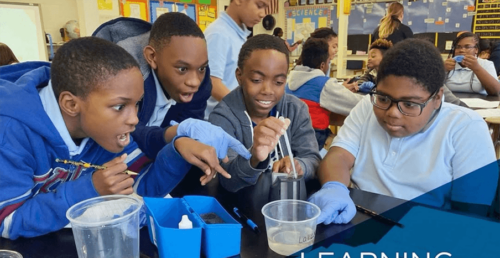
Learning Undefeated provides all instruction and the materials needed to complete engineering design challenges focused on brainstorming, designing, and testing during the mobile laboratory visit. All activities focus on students designing solutions to problems and allow for collaboration and exploration of the content.
Grades: Kindergarten through Grade 8
Activity duration: All activities are 60 minutes in duration.
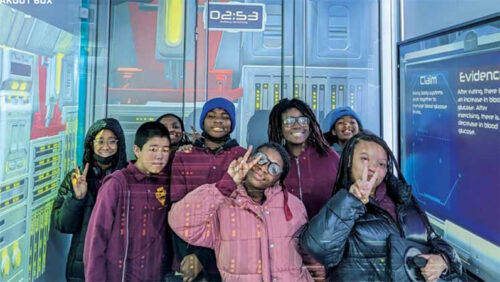
Class size: The Texas Mobile STEM Lab can host up to 30 students at a time for class
Magnets Push, Magnets Pull (grades K-1)
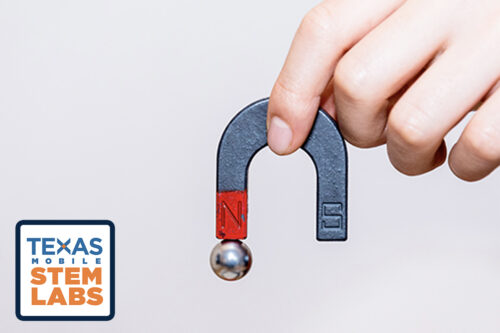
In this design challenge, students will read the storybook Magnets Push, Magnets Pull to learn about how magnets work. The students will receive the following problem; “Jose loves to entertain his community by designing hay mazes every year. He needs some help this year in thinking of a new maze design. Today, you will be putting on your engineering hat to build a maze!” Students will engage in a STEM challenge to design a solvable maze with one entrance and exit that utilizes only a magnet to solve.
+ Science TEKS covered in this design challenge
Kinder TEKS: K.6B
Grade 1 TEKS: 1.6B
+ Math TEKS covered in this design challenge
Kinder TEKS: K.2A, K.2C, K.5
Grade 1 TEKS: 1.3D, 1.3E, 1.5A
+ Teacher Resources
Lesson Plan – Kinder (Word) | Lesson Plan – Grade 1 (Word) | Rubric (Word) | PowerPoint (PPT)
Jack and the Beanstalk (grades K-2)
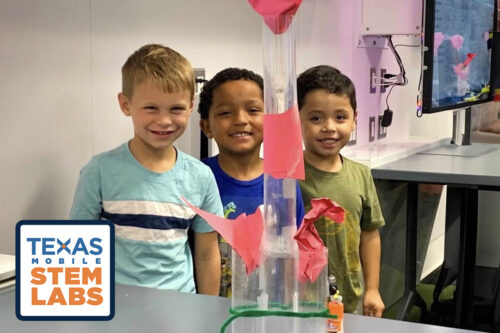
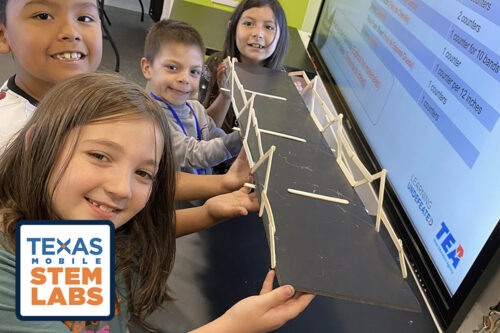
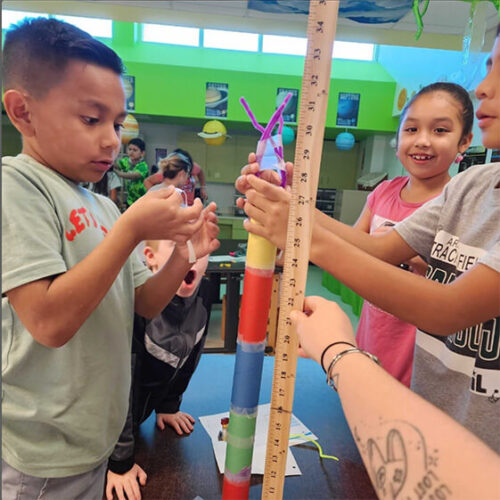
In this design challenge, students will receive a problem inspired by the story Jack and the Beanstalk by Carol Ottolenghi. In the story, Jack climbs a magical beanstalk where he finds a castle that he steals several items from before returning home. The students will be presented with the following problem: “Jack wants to go back to the castle in the sky to return the hen and the harp he stole, but he is out of magic beans. He does not know how he will get back to the castle. Today, you are going to put on your engineering hat to help Jack build a “beanstalk” that can reach all the way to the giant’s castle in the sky so he can return the stolen items.” Students will engage in a STEM challenge to build the tallest structure in 25 minutes that can hold a toy figure (Jack) for one minute. Teams will receive bonus points if their structure can withstand a 30-second windstorm before Jack safely returns to his home on the ground.
+ Old Science TEKS covered in this design challenge
Kinder TEKS: K.5A, K.6C
Grade 1 TEKS: 1.5A, 1.5C
Grade 2 TEKS: 2.5C, 2.5D
+ New Science Scientific and Engineering Practices covered in this design challenge
Kinder TEKS: K.1B, K.1E, K.1G, K.13A
Grade 2 TEKS: 2.1B, 2.1E, 2.1G, 2.1G, 2.13A
+ Math TEKS covered in this design challenge
Kinder TEKS: K.2A, K.2C, K.5, K.6E
Grade 1 TEKS: 1.3D, 1.3E, 1.5A, 1.7A
Grade 2 TEKS: 2.2B, 2.4A, 2.9D
+ Teacher Resources
Lesson Plan(Word) | Rubric (Word) | Spanish Rubric (Word) | PowerPoint (PPT)
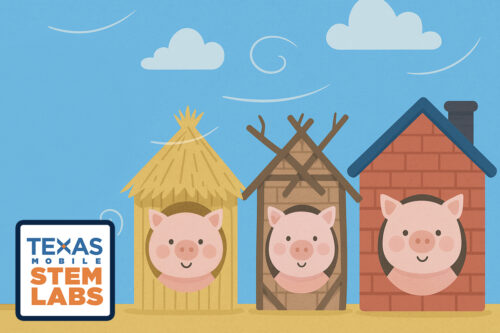
The True Story of the Three Little Pigs (grades K-2)
In this design challenge, students will receive a problem from the story The True Story of the Three Little Pigs by Jon Scieszka. In the story, the wolf tells his side of the story of the The Three Little Pigs. The wolf was planning to bake a birthday cake for his grandma and needed to get a cup of sugar. However, on his journey he sneezes and blows down the homes of the three little pigs. The students will be presented with the following problem, “The eldest brother of the three little pigs is looking to rebuild the destroyed homes in his community after the sneezing wind disaster caused by the wolf.” Students will put on their engineering hats to help the eldest brother rebuild homes in the community. Students will engage in a STEM challenge to build a home in 25 minutes that can withstand the wolf’s sneeze for 5 seconds. Teams will receive bonus points if their home can withstand the wolf’s super sneeze for 5 seconds while protecting the pig inside.
+ Old Science TEKS covered in this design challenge
Kinder TEKS: K.5A, K.7C
Grade 1 TEKS: 1.5A, 1.5C, 1.7C, 1.8D
Grade 2 TEKS: 2.5D
+ New Science Scientific and Engineering Practices covered in this design challenge
Kinder TEKS: K.1B, K.1E, K.1G, K.6, K.10C
Grade 1 TEKS: 1.1B, 1.1E, 1.1G, 1.6A, 1.6C
Grade 2 TEKS: 2.1B, 2.1E, 2.1G, 2.6A, 2.6B, 2.6C
+ Math TEKS covered in this design challenge
Kinder TEKS: K.2A, K.2C, K.5
Grade 1 TEKS: 1.3D, 1.3E, 1.5A
Grade 2 TEKS: 2.2B, 2.4A
+ Teacher Resources
Lesson Plan (Word) | Rubric (Word) | Spanish Rubric (Word) | PowerPoint (PPT)
Goldilocks and the Three Bears (grades K-2)
In this design challenge, students will receive a problem inspired by the story Goldilocks and the Three Bears by James Marshall. In the story, Goldilocks is assigned the task of buying muffins in the next village but is warned not to take the shortcut through the forest. However, Goldilocks does as she pleases and ends up finding the home of the three Bears. She walks right into the house without knocking and begins to cause mischief. Having tried the Bear’s food, chairs, and beds, Goldilocks eventually falls asleep. When the Bear family returns, they find a sleeping Goldilocks who awakes startled and runs home. Although everyone is safe in the end, the Baby Bear’s chair is destroyed. Students will engage in a STEM challenge to build a chair for the Bear family’s guest in 25 minutes. Teams will receive bonus points if a student from the team can sit in the chair.
+ Old Science TEKS covered in this design challenge
Kinder TEKS: K.5.A
Grade 1 TEKS: 1.5.A, 1.5.C
Grade 2 TEKS: 2.5.C, 2.5.D
+ New Science Scientific and Engineering Practices covered in this design challenge
Kinder TEKS: K.1.B, K.1.E, K.1.G, K.6.A
Grade 1 TEKS: 1.1.B, 1.1.E, 1.1.G, 1.6.C
Grade 2 TEKS: 2.1.B, 2.1.E, 2.1.G, 2.6.C
+ Math TEKS covered in this design challenge
Kinder TEKS: K.2.A, K.2.C, K.5, K.6.E
Grade 1 TEKS: 1.3.D, 1.3.E, 1.5.A, 1.7.A
Grade 2 TEKS: 2.2.B, 2.4.A, 2.9.D
+ Teacher Resources
Lesson Plan (Word) | Rubric (Word) | Spanish Rubric (Word) | PowerPoint (PPT)
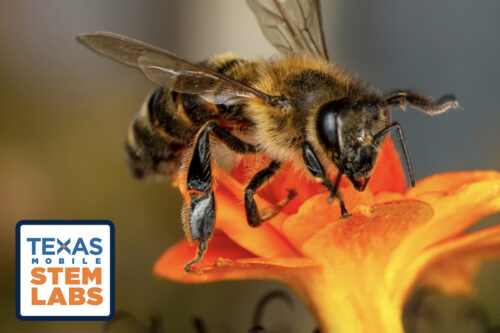
What If There Were No Bees? (grades 2-4)
In this design challenge, students will recieve a problem derived from the story What If There Were No Bees? by Suzanne Slade. In the story, Suzanne talks about how bees help the ecosystem and the ramifications if bees were to disappear from the ecosystem. The students will be presented with the following problem: “The Lee, Martinez, and Smith families have noticed that there are fewer bees around their farm. They are worried that over time, there may be no bees left to pollinate their crops. What can they do to make sure their crops and surrounding lands get pollinated?” Students will engage in a STEM challenge to build an artifical pollinator in 25 minutes. Teams will receive bonus points if their pollinator can transfer enough pollen in different size flowers.
+ Old Science TEKS covered in this design challenge
Grade 2 TEKS: 2.9A, 2.9C
Grade 3 TEKS: 3.10B
Grade 4 TEKS: 4.10C
+ New Science Scientific and Engineering Practices covered in this design challenge
Grade 2 TEKS: 2.1B, 2.1G, 2.12B, 2.12C
Grade 3 TEKS: 3.1B, 3.1G, 3.12B
Grade 4 TEKS: 4.1B, 4.1G
+ Math TEKS covered in this design challenge
Grade 2 TEKS: 2.2B, 2.4A, 2.9D
Grade 3 TEKS: 3.4A, 3.7E
+ Teacher Resources
Lesson Plan – Grade 2 (Word) | Lesson Plan Grades 3-4 (Word) | Rubric (Word) | Spanish Rubric (Word) | PowerPoint (PPT)
Circuits (grades 4-6)
In this design challenge, students will receive the task of improving an existing toy design called a Wigglebot. The Wigglebot can wiggle through the use of a DC motor, a machine that transforms electric energy into mechanical energy in the form of rotation. Students will learn about electricity and circuitry before taking on the challenge of adding more features to this toy. The students will be presented with the following problem: “Maria’s company currently sells Wigglebots, but has gotten feedback from her market research that they need to do more than just wiggle. She is looking to improve the design of this toy to include more features while keeping its’ same look.” Students will put on their engineering hats to help Maria improve the design of her toy. Students will engage in a STEM challenge to design a Wigglebot that can produce light and sound while still being able to wiggle.
+ Old Science TEKS covered in this design challenge
Grade 4 TEKS: 4.6A, 4.6B, 4.6C
Grade 5 TEKS: 5.6A, 5.6B
Grade 6 TEKS: 6.9C
+ New Science Scientific and Engineering Practices covered in this design challenge
Grade 4 TEKS: 4.1B, 4.1G, 4.2D, 4.8C
Grade 5 TEKS: 5.1B, 5.1G, 5.2D, 5.8A, 5.8B
+ Math TEKS covered in this design challenge
Grade 4 TEKS: 4.8C
Grade 5 TEKS: 5.10F
Grade 6 TEKS: 6.3D, 6.3E
+ Teacher Resources
Lesson Plan (Word) | Rubric – Grade 4 (Word) | Rubric – Grades 5-6 (Word) | Spanish Rubric – Grade 4 (Word) | Spanish Rubric – Grades 5-6 (Word) | PowerPoint (PPT)
Biomimicry (grades 4-5, 7)
In this design challenge, students will receive a challenge to develop a prosthesis for John who lost his arm while operating machinery. Students will learn about biomimicry and get a basic understanding of how we, as humans, have looked to nature as a source of inspiration for designing solutions. The students will be presented with the following problem: “John recently got into an accident while operating machinery. Fortunately, he will recover but had to have his right arm amputated. With advances in technology, prosthetics can now be made with 3D printers. However, John is not sure how to create one and needs your help in designing a prosthesis that will allow him to complete certain tasks. Today, you will put on your engineering hat to create the initial design for a prosthesis. By looking to nature, you will be able to design a prosthesis that can grab, move, and open a water bottle.” Students will put on their engineering hats to help John design a prosthesis. Students will engage in a STEM challenge to design a prosthesis that can hold a water bottle, lift one up and move it, and have a firm enough grip to open the water bottle. Teams will receive bonus points if their prosthesis can be tested using only one hand.
+ Old Science TEKS covered in this design challenge
Grade 4 TEKS: 4.10A
Grade 5 TEKS: 5.10A
Grade 7 TEKS: 7.12B
+ New Science Scientific and Engineering Practices covered in this design challenge
Grade 4 TEKS: 4.1B, 4.1G, 4.2D,
Grade 5 TEKS: 5.1B, 5.1G, 5.2D, 5.13A
Grade 7 TEKS: 7.1B, 7.1G, 7.2D, 7.13A
+ Math TEKS covered in this design challenge
Grade 4 TEKS: 4.8C
Grade 5 TEKS: 5.10F
Grade 7 TEKS: 7.3A
+ Teacher Resources
Lesson Plan (Word) | Rubric (Word) | Spanish Rubric (Word) | PowerPoint (PPT)
Space Capsule Drop (grades 6-8)
In this design challenge, students will learn about space capsules and why they are used instead of shuttles. Students will also design a space capsule for an upcoming flight. The students will be presented with the following problem: “LU-X is looking to get involved in the space tourism business. However, they have mainly focused on designing rockets rather than space capsules. LU-X is now in the process of developing space capsules that are safe for human flight and can be reused to keep costs down.” Students will put on their engineering hats to build a space capsule that can protect the astronauts inside. Students will engage in a STEM challenge to design a space capsule that is able to safely land on a target. Bonus points will be awarded for those who wish to push their designs to safely land within the targeted landing zone in windy conditions.
+ Old Science TEKS covered in this design challenge
Grade 6 TEKS: 6.8B, 6.8C, 6.11C
Grade 7 TEKS: 7.9B
Grade 8 TEKS: 8.6A, 8.6C
+ New Science Scientific and Engineering Practices covered in this design challenge
Grade 6 TEKS: 6.1B, 6.1G, 6.2D
Grade 7 TEKS: 7.1B, 7.1G, 7.2D, 7.7A
Grade 8 TEKS: 8.1B, 8.1G, 8.2D
+ Math TEKS covered in this design challenge
Grade 6 TEKS: 6.3D, 6.3E
Grade 7 TEKS: 7.3A, 7.3B, 7.4B
+ Teacher Resources
Lesson Plan (Word) | Rubric (Word) | Spanish Rubric (Word) | PowerPoint (PPT)
Bottle Rocket Truck (grades 6-8)
In this design challenge, students will design a truck that is as efficient as possible for Jennifer’s transportation company. Students will learn about Newton’s Laws of Motion, with emphasis on the first and third law, and see a laboratory demonstration of a chemical reaction. The chemical reaction will occur between acetic acid and sodium bicarbonate, the same materials they will use for their design challenge. The students will be presented with the following problem: “Jennifer’s transportation company is currently trying to figure out how to maximize the output of her trucks. They travel far distances with a lot of goods and do not want to waste any fuel.” The students will put on their engineering hats to build a truck that will travel an exact distance on a single tank of gas. Students will engage in a STEM challenge to design a truck powered by a chemical reaction that will have to stop within a specific drop-off zone. Teams will be challenged with various payloads to earn bonus points if they can stop in the drop-off zone.
+ Old Science TEKS covered in this design challenge
Grade 6 TEKS: 6.4B, 6.5C, 6.8B
Grade 7 TEKS: 7.4B, 7.7A
Grade 8 TEKS: 8.4B, 8.5E, 8.6A, 8.6C
+ New Science Scientific and Engineering Practices covered in this design challenge
Grade 6 TEKS: 6.1B, 6.1G, 6.2D, 6.6E, 6.7C
Grade 7 TEKS: 7.1B, 7.1G, 7.6C, 7.7D
Grade 8 TEKS: 8.1B, 8.1G, 8.6E
+ Math TEKS covered in this design challenge
Grade 6 TEKS: 6.3D, 6.3E
Grade 7 TEKS: 7.3A, 7.3B
+ Teacher Resources
Lesson Plan (Word) | Rubric (Word) | Spanish Rubric (Word) | PowerPoint (PPT)
Maintaining a Balance (grades 3-5, 7-8)
In this design challenge, students will discuss ecosystems and take part in a species survival demonstration. This demonstration will challenge students to remove as many species from the environment as possible within one minute and discuss their results. The students will then be presented with the following problem: “Our ecosystem’s population balance has gone out of control. We need to fix our ecosystem to make sure there is equilibrium amongst the species.” The students will put on their engineering hats to assist in maintaining species populations within an ecosystem. The teams will have an opportunity to design a tool to remove the invasive species and restore balance to the ecosystem.
+ Old Science TEKS covered in this design challenge
Grade 3 TEKS 3.9A, 3.9C
Grade 4 TEKS 4.9B
Grade 5 TEKS 5.9A
Grade 7 TEKS: 7.10B, 7.11B
Grade 8 TEKS: 8.11B
+ New Science Scientific and Engineering Practices covered in this design challenge
Grade 3 TEKS 3.1B, 3.1G, 3.2D, 3.12B, 3.12C
Grade 4 TEKS 4.1B, 4.1G, 4.2D, 4.12B
Grade 5 TEKS 5.1B, 5.1G, 5.2D, 5.12B
Grade 7 TEKS 7.1B, 7.1G, 7.12B
Grade 8 TEKS 8.1B, 8.1G, 8.12B
+ Math TEKS covered in this design challenge
Grade 3 TEKS 3.4A, 3.4G
Grade 4 TEKS 4.4H, 4.8H
Grade 5 TEKS 5.10F
Grade 7 TEKS: 7.3A, 7.3B
+ Teacher Resources
Grades 3-5: Lesson Plan (Word) | Rubric – Grades 3-4 (Word) | Rubric – Grade 5 (Word) | Spanish Rubric – Grades 3-4 (Word) | Spanish Rubric – Grade 5 (Word) | PowerPoint (PPT)
Grades: 7-8: Lesson Plan (Word) | Rubric (Word) | Spanish Rubric (Word) | PowerPoint (PPT)
Flood Barriers (grades 3-5, 7)
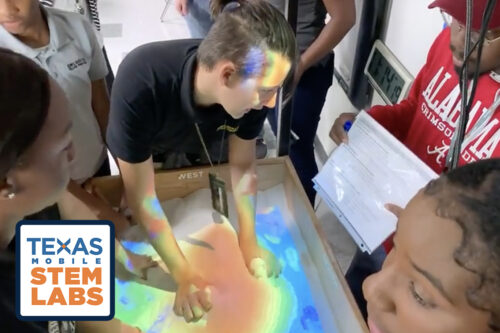
In this design challenge, students will learn about downstream flooding as a problem in their community. Students will see how downstream water can cause flooding through the aid of an augmented reality (AR) sandbox. They will then be presented with the following problem: “Your home has been flooding. The city is unable to provide direct assistance, and so you must design a solution to deal with this incoming water.” Students will put on their engineering hats to design flood barriers made from different natural materials to determine what works best in diverting water away from their homes. Students will engage in a STEM challenge to design solutions to help their community and limit the amount of water seeping into their property.
+ Old Science TEKS covered in this design challenge
Grade 3 TEKS: 3.5D, 3.7B, 3.7C
Grade 4 TEKS: 4.7A, 4.7B
Grade 7 TEKS: 7.8A, 7.8C
+ New Science Scientific and Engineering Practices covered in this design challenge
Grade 3 TEKS: 3.1D
Grade 4 TEKS: 4.1D
Grade 7 TEKS: 7.1B, 7.1G, 7.2G, 7.11A
+ Math TEKS covered in this design challenge
Grade 3 TEKS: 3.4A, 3.4G
Grade 4 TEKS: 4.6B, 4.8C
Grade 7 TEKS: 7.3A, 7.3B
+ Teacher Resources
Grades 3-4: Lesson Plan (Word) | Rubric (Word) | Spanish Rubric (Word) | PowerPoint (PPT)
Grade 7: Lesson Plan (Word) | Rubric (Word) | Spanish Rubric (Word) | PowerPoint (PPT)
City Planning(grades 5, 7)
In this design challenge, students will be presented with flooding as a problem that needs to be addressed by city planners. Students will get to look at an AR Sandbox demo to demonstrate how rainfall can impact a city and are will then be presented with the following problem. “The city of Teastem has hired you, a city planner, to assist in dealing with the city’s problem of flooding. You have brought in an AR Sandbox to lay out the topography of the city to analyze the layout of the city and design a solution for the flooding problem. Today, you will put on your engineering hat to prevent flooding in the town of Teastem.” Students will engage in a STEM challenge to design solutions for the city of Teastem that provide multiple methods to address flooding without causing further damage to the city. Teams will receive bonus points if their solutions hold up against slow earth changes from weathering and erosion occurring gradually over time and fast earth changes from weathering and erosion that cause sudden damage like a landslide.
+ Old Science TEKS covered in this design challenge
Grade 5 TEKS: 5.10C, 5.12C
Grade 7 TEKS: 7.8A, 7.8B, 7.8C
+ New Science Scientific and Engineering Practices covered in this design challenge
Grade 3 TEKS: 3.1G, 3.2D, 3.10C
Grade 4 TEKS: 4.1G, 4.2D, 4.10B
Grade 7 TEKS: 7.1G, 7.2D, 7.11A
+ Math TEKS covered in this design challenge
Grade 5 TEKS: 5.10F
Grade 7 TEKS: 7.3A, 7.3B
+ Teacher Resources
Lesson Plan (Word) | Rubric (Word) | Spanish Rubric (Word)| PowerPoint (PPT)