Genetic Transformation (Classroom)
Moving genes from one organism to another
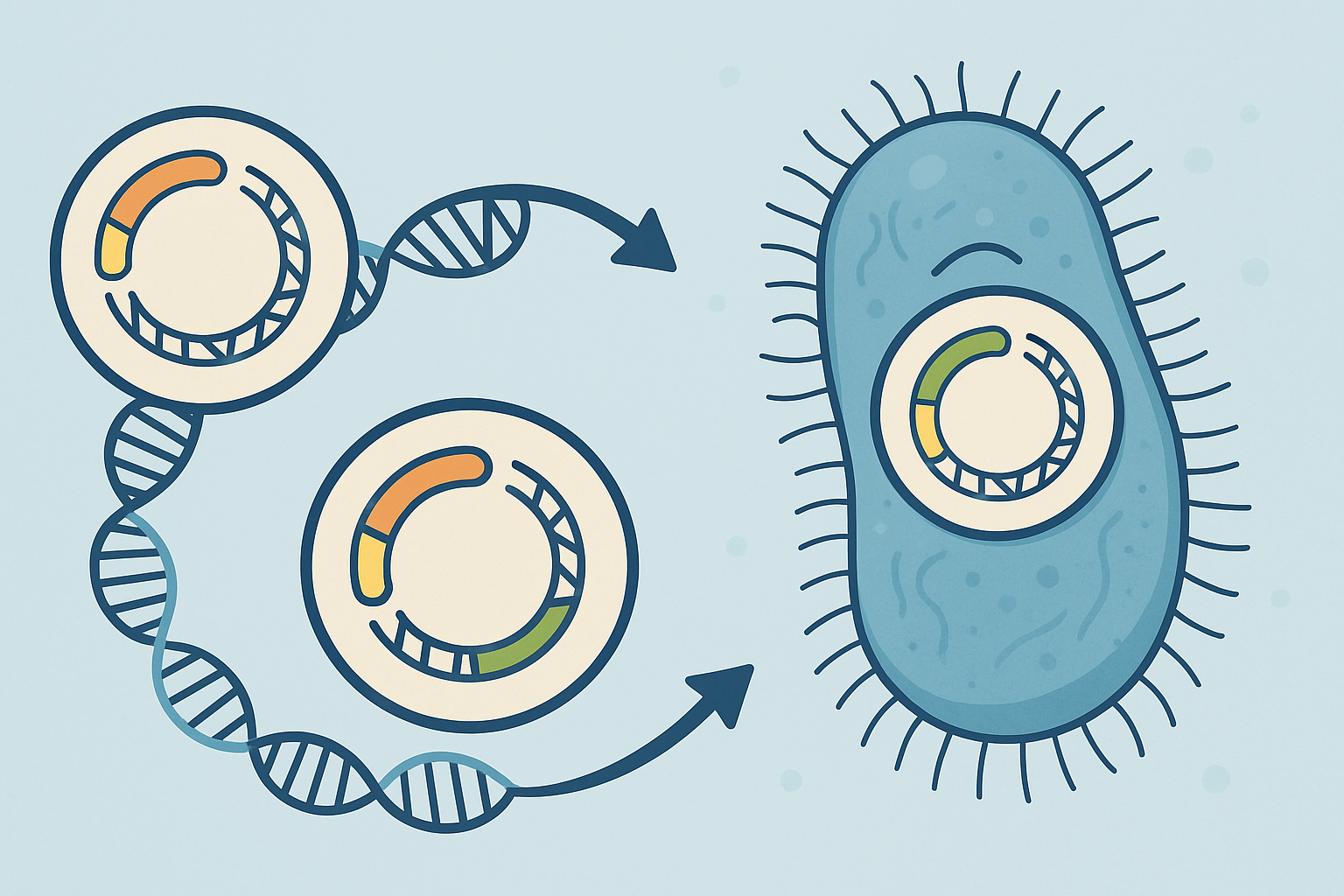
What are genetically modified organisms and how are they made? Why purposes do genetically modified organisms serve? Transformation is an activity created by Learning Undefeated to help students explore the process of moving genes from one organism to another using genetic transformation. Students will learn how plasmids are made, how heat shocking works to bring a plasmid into a cell, and will research the ethics of GMO use.
Looking for the mobile laboratory version of Transformation?
Looking for the answer keys for this activity bundle? Complete this form to gain the password to our Activity Keys webpage.
Learning Objectives
Students will know
- What is transformation
- The use of bacteria as a genetic tool
- How genes are introduced into other organisms for scientific, agricultural, and medical use
Students will understand
- How DNA plasmids are introduced into bacteria
- How genes are regulated
- How genetic markers are used
Students will be able to
- Define wild-type vs. mutant phenotypes
- Locate the different genes on a pGlo plasmid
- Select for transformed bacteria
- Analyze the growth of bacteria
- Calculate the transformation efficiency
Standards Alignments + Connections
Next Generation Science Standards Connections
HS-LS3-1 Ask questions to clarify relationships about the role of DNA and chromosomes in coding the instructions for characteristic traits passed from parents to offspring
Texas Essential Knowledge and Skills Connections
BIOL.2(E) Plan and implement descriptive, comparative, and experimental investigations, including asking questions, formulating testable hypotheses, and selecting equipment and technology;
BIOL.6(A) Identify components of DNA, identify how information for specifying the traits of an organism is carried in the DNA, and examine scientific explanations for the origin of DNA
BIOL.6(D) Recognize that gene expression is a regulated process
Louisiana Standards for Science Connections
HS-LS1-1 Construct an explanation based on evidence for how the structure of DNA determines the structure of proteins which carry out the essential functions of life through systems of specialized cells.
Unit Plan
Pre-Laboratory Engagement (45-60 minutes)
Students should visit the Bacterial Transformation Lab website provided by the Lab Center at Harlem DNA Lab
- Students complete the background reading section and answer questions on the student worksheet
- Students watch the Transformation interactive and answer questions on the student worksheet
- Optional: Have students explore the rest of the website for more background and history.
Students should complete the Make a Plasmid activity
- Students cut out plasmid and insulin DNA sequences and must cut them at restriction sites so the two sections will ligate together.
Optional: Have students answer questions on the Student worksheet.
Laboratory Activity (60-75 minutes)
- Students should watch lab activity video Transformation Part One (5:42) and complete Part I of the student activity worksheet.
- Students should watch Transformation Part Two (13:50) and complete Part II, III, IV, and V of the student worksheet
- After completion of the video students view the worksheet walkthrough to help them answer the questions and learn the material.
- Video can be supplied before or after student work is submitted
- Optional: Students should perform a lab simulation of transformation using the PBS Gene Cloning activity (Computers will need to be Flash enabled)
- Students should complete both Making a Recombinant Plasmid and Bacteria Transformation tabs
- Students answer questions about the activity on their student worksheet
Post Laboratory Extension
- Students write an argumentative essay on the ethics of genetically modified organisms (GMOs) using references and proper MLA citations.
Keep Going! Your Students May Also Enjoy...
The Next Generation of Innovators
Medtronic Spark Explore Mobile Experience